

Quick Summary
- Housing Costs are Below Average: The median home value in the City of St. Louis is about $197,500, and Missouri's cost of living runs about 11% under the national average.
- The City and County Are Separate: The City of St. Louis isn't part of St. Louis County, so look up which one a home is in before you sign anything.
- Plan on Owning a Car: MetroLink covers a few main routes, but most residents drive for work and daily errands.
- Budget for Missouri's Car Tax: Missouri taxes vehicles as personal property every year, and you'll need proof of payment or a waiver to register your car.
Moving to St. Louis usually starts with a picture of the Arch, but the first thing most newcomers notice once they arrive is the brick. Red-brick homes line street after street in the older neighborhoods, and you can often buy one for less than a condo costs in bigger metros.
The metro area stretches across both sides of the Mississippi River, and it includes the City of St. Louis, St. Louis County, St. Charles County and the Metro East communities in Illinois. We'll cover all four, along with what it costs to live here and what you'll need to handle once you're a Missouri resident.
Let's walk through what living in St. Louis looks like and how to find an area that fits your budget.
Welcome to St. Louis
- Population: About 2.8 million across the metro area, including about 278,000 in the City of St. Louis.
- Growth: The metro area has stayed close to flat since 2020, while the city itself has lost residents.
- Climate: Four distinct seasons, with hot, humid summers and cold winters.
- Economy: Healthcare, higher education, aerospace and financial services.
- Airports: St. Louis Lambert International, plus MidAmerica St. Louis Airport across the river in Illinois.
- Landmarks: The 630-foot Gateway Arch is the tallest monument in the United States, and Forest Park covers around 1,300 acres, which makes it bigger than Central Park.
- Local Flavor: Toasted ravioli is a breaded, fried appetizer served with marinara, and you'll find it on menus all over town. St. Louis-style pizza is topped with Provel, a processed cheese that's hard to find outside the region.
Affordability is one of the biggest reasons people move here, so let's start with the question most newcomers ask first.
Is St. Louis a Good Place to Live?
St. Louis is a good place to live for a lot of people, especially if you want city amenities without big-city housing prices. Many of its best-known attractions are free, and each neighborhood has its own restaurants and traditions, so living in St. Louis can feel like living in a collection of small towns.
There are a few trade-offs to think about before you start relocating to St. Louis. The city's population has been shrinking for decades, and safety can change from one neighborhood to the next, so research specific areas before you commit.
Cost of Living in St. Louis
Housing is where you'll notice the lower cost of living in St. Louis the most. Missouri's overall cost of living index was 88.8 in the third quarter of 2026, which puts the state about 11% below the national baseline.
Housing Costs
In the City of St. Louis, the median home value is about $197,500, and median gross rent is $997 a month, based on Census estimates for 2020 to 2024. Prices climb in the most sought-after suburbs, so compare a few areas before you settle on a budget.
Beyond Housing
Missouri has a state income tax, and the City of St. Louis adds a 1% earnings tax for residents and for anyone who works inside city limits. Missouri also taxes cars as personal property every year, so plan for that bill on top of your registration fees.
Jobs and the St. Louis Economy
Healthcare and higher education employ a big share of the region. Washington University in St. Louis has 23,434 employees, which makes it the region's second-largest employer, and BJC HealthCare runs Barnes-Jewish Hospital and St. Louis Children's Hospital.
Boeing also has a large presence in the region, and Edward Jones and Enterprise both have their headquarters here. The average annual wage across all jobs in the St. Louis region was $67,620 in 2025.
St. Louis City vs. St. Louis County
The City of St. Louis and St. Louis County have been separate since voters approved a split in 1876, and the city doesn't belong to any county. St. Louis County surrounds the city everywhere except along the river, and it has about 990,911 residents compared with the city's 278,144.
A St. Louis mailing address can belong to either one, and the answer decides which school district you're in and which offices handle your taxes.
| City of St. Louis | St. Louis County | |
|---|---|---|
| Earnings tax | 1% on residents | Only if you work in the city |
| Public schools | St. Louis Public Schools | Many separate districts |
| Personal property tax | City Assessor and Collector | County Assessor and Collector |
Best Places to Live in St. Louis
The best place to live in St. Louis comes down to your budget and how much space you want. The city alone has 79 official neighborhoods, and conditions can vary from block to block, so look up local data for any address before you sign a lease or make an offer.
St. Louis City Neighborhoods
- Central West End: Right on the eastern edge of Forest Park, the CWE mixes historic mansions with a busy strip of restaurants along Euclid Avenue, and it's close to the Barnes-Jewish Hospital campus.
- Lafayette Square: This small neighborhood just south of downtown is known for its "Painted Ladies," restored Victorian homes that face Lafayette Park.
- The Hill: St. Louis's Italian American neighborhood has fire hydrants painted red, white and green, along with family-run bakeries and restaurants next to modest brick homes.
- Soulard: One of the city's oldest neighborhoods, Soulard is packed with red-brick row houses and hosts the city's Mardi Gras celebration, so expect crowds each winter.
- Benton Park: Just west of Soulard, Benton Park has shops and casual restaurants in 19th-century buildings, and many of its brick homes have already been updated.
- Dogtown: This area south of Forest Park has deep Irish roots and a small-town feel, and being so close to the park is a big part of its appeal.
- Tower Grove: The Tower Grove neighborhoods surround Tower Grove Park, with the Missouri Botanical Garden next door and a lively restaurant strip along South Grand.
St. Louis County Suburbs
- Clayton: The county seat has a downtown full of offices and restaurants, and its school district ranks among the best in the country.
- Kirkwood and Webster Groves: These older suburbs offer walkable main streets and established neighborhoods with mature trees.
- Chesterfield: Out in west county, Chesterfield offers newer homes and plenty of shopping.
St. Charles County
St. Charles County is west of St. Louis County across the Missouri River, and it's where many of the region's newer subdivisions have gone up.
- St. Charles: The county's namesake city has a historic Main Street along the river.
- St. Peters and O'Fallon: Both offer larger lots and newer neighborhoods within commuting distance of the county.
- Wentzville: Farther west, Wentzville appeals to buyers who want more space and don't mind a longer drive into the city.
The Metro East
The Metro East is the Illinois side of the region, so Illinois taxes and vehicle requirements apply here.
- Edwardsville: Home to Southern Illinois University Edwardsville, it's popular with families and university staff.
- Belleville: Belleville has a historic downtown and its own stops on MetroLink's Red Line.
- O'Fallon, Illinois: Its location near Scott Air Force Base makes it a common pick for military households, and the Red Line ends at the Shiloh-Scott station next to the base.
Getting Around St. Louis
Most people who live in St. Louis need a car, since the region is spread out and many suburbs don't have regular transit service. St. Louis traffic is lighter than in bigger metros, but rush hour still backs up on I-64 and I-270. You'll also hear locals call I-64 "Highway 40," its old route number, so don't be thrown when someone gives you directions that way.
MetroLink, the region's light rail system, works well if you live and work near a station. The Red Line runs between Lambert Airport and the Shiloh-Scott station in Illinois, and the Blue Line runs between Shrewsbury and Fairview Heights, with stops in Clayton and downtown along the way.
St. Louis Weather and Natural Hazards
Year-Round Weather
St. Louis has four distinct seasons. Summers are hot and humid, with about 47 days of 90°F or hotter in a typical year, while fall is mild and one of the most comfortable times of year to move.
Winters are cold, and the area averages a little over 18 inches of snow per season. Ice storms can make roads slick, so leave some flexibility in your moving date if you're relocating in January or February.
Severe Storms and Flooding
Spring brings severe thunderstorms and tornado risk, so sign up for local weather alerts once you move. If you're looking at homes near the rivers or smaller creeks, check the address on FEMA's Flood Map Service Center, since standard homeowners and renters policies usually don't cover flood damage.
Moving to Missouri: Settling In as a New Resident
Missouri asks new residents to apply for a Missouri driver license as soon as they move, and you'll have 30 days to title and register your car through the Department of Revenue.
Before you register, get a personal property tax waiver from your city or county assessor, along with an emissions inspection if you live in St. Louis City or Jefferson, St. Charles or St. Louis counties. If you're settling in the Metro East, go through Illinois for your license and registration instead.
Schools and Healthcare
St. Louis Public Schools serves the city, while St. Louis County is split into many separate districts. In Niche's 2025 rankings, the Ladue School District placed sixth in the country and the Clayton School District placed 31st, and Kirkwood and Webster Groves are also popular with families.
For college, Washington University in St. Louis and Saint Louis University are both in or right next to the city, and the University of Missouri–St. Louis has its campus in north county.
On the healthcare side, BJC HealthCare, SSM Health, Mercy and WashU Medicine run hospitals and clinics across the region.
Free Things to Do in St. Louis
Some of the best things to do in St. Louis are free. Forest Park covers around 1,300 acres, which makes it bigger than Central Park, and admission to the zoo, art museum, history museum and science center inside it is free.
Tower Grove Park and the grounds of Gateway Arch National Park don't cost anything to visit either, and neighborhoods like Soulard host big community celebrations throughout the year.
Ready for Your St. Louis Move?
Many St. Louis neighborhoods were built long before moving trucks, and their narrow streets and older driveways leave little room to park and load a big rental. If you're moving on an icy January morning or a sticky August afternoon, those extra trips up and down the ramp get old fast.
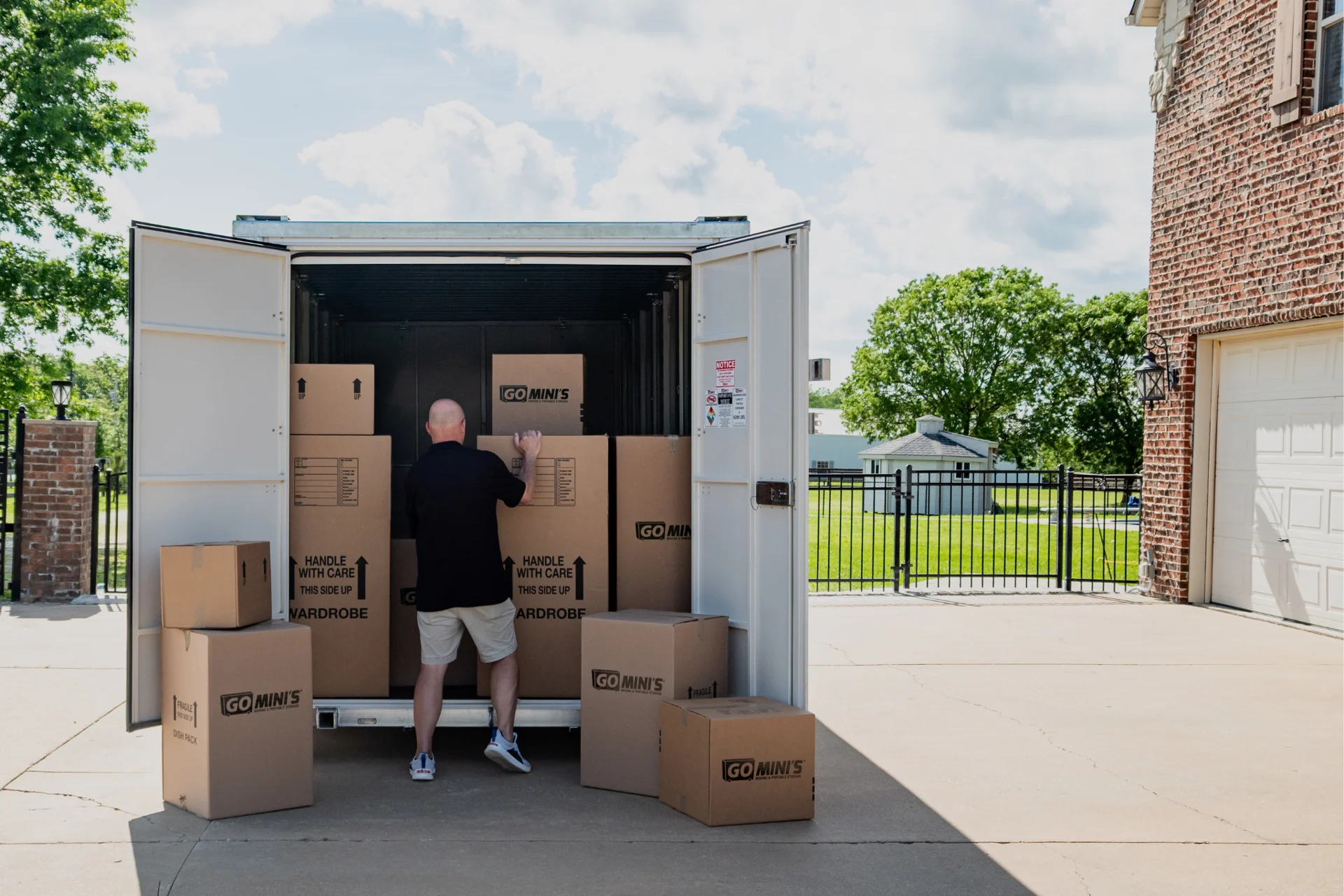
With a Go Mini's portable storage container, you never have to get behind the wheel of a truck. We drop the container off at your home so you can pack whenever it suits your schedule, and once you're done, our team picks it up and either stores it or brings it to your new address.
Need Local Moving Storage in St. Louis?
Go Mini's of St. Louis is locally owned and operated, so the team knows these neighborhoods and their tight streets firsthand. They serve the city, St. Louis County, St. Charles County and the Metro East, and they'd be glad to help welcome you to your new hometown. If you're moving across the state, Go Mini's also has locations in Springfield and Overland Park, which serves the Kansas City area. Find your location and get your free, instant quote today!
Frequently Asked Questions
What salary is needed to live comfortably in St. Louis?
MIT's Living Wage Calculator estimates that a single adult in the St. Louis metro needs about $45,320 a year before taxes to cover basic needs, and a household with two working adults and two children needs about $113,497 combined. Plan for more if you want room for savings and extras.
Is it cheaper to live in St. Louis or Chicago?
St. Louis is cheaper, especially when it comes to housing. Census estimates put Chicago's median home value at $315,200 and median rent at $1,380, compared with $197,500 and $997 in the City of St. Louis.
Is St. Louis better than Kansas City?
Both cities are affordable, so it comes down to what you want day to day. St. Louis tends to appeal to people who want older brick neighborhoods and free cultural attractions, and visiting both is the best way to decide.
What part of St. Louis is the best to live in?
The Central West End and Lafayette Square are popular with people who want walkable city living, while suburbs like Kirkwood and Chesterfield draw families looking for more space and highly rated schools.
What are the safest areas around St. Louis?
Safety can vary a lot from one block to the next, so a ranked list won't tell you much about a specific street. Look up crime data for any address through the local police department, and visit at different times of day before you commit.
Is St. Louis growing or declining?
The City of St. Louis has lost population, falling to 278,144 residents in 2025, while the metro area has stayed close to 2.8 million people as some suburbs grow.