


Quick Summary
- Start early: Start prep 2 to 3 weeks before load day, not the morning of.
- Clean first: Clean and empty every piece before you wrap it.
- Break it down: Disassemble what comes apart, then bag and label the hardware.
- Match the wrap: Wrap by material: wood, upholstery, glass, and mattresses each need different protection.
- Appliance prep: Prep large appliances 24 to 48 hours before loading.
- Check the list: Know which items legally can't go in a Go Mini's container before you pack.
If you're loading a portable storage container like Go Mini’s yourself, you're already saving big on your move. The trade-off is that everything a full-service crew would normally do for you now falls to you. That includes the prep stage between packing your boxes and loading your container.
Prepping your furniture and appliances is the make-or-break stage of a DIY move. Skip it, and you'll spend the money you saved on replacements. Here is what to prep and how, so your container arrives at the other end with everything intact.
How to Prep for a DIY Move
Give prep its own window in your moving timeline instead of squeezing it into load day.
Start prepping 2 to 3 weeks out if you can. That gives you time to:
- Take inventory and photos of every piece before you take it apart. You'll thank yourself during reassembly.
- Measure furniture and doorways at both your current home and your new one. A sectional that fit going in doesn't always fit coming out.
- Decide what should really go. Long-distance moves cost by weight and space. If a piece won't fit your new home or isn't worth the trip, sell or donate it now.
How to Clean Furniture Before a Move
Don't load any piece of furniture without cleaning it first. Dirt and moisture trapped under wraps for days or weeks in transit can lead to mildew, warping, pest problems, and stubborn odors by the time your container arrives.
Wipe down wood pieces with a lightly damp cloth and let them dry completely. Vacuum upholstered furniture and treat any stains before wrapping. Empty every drawer and cabinet. Leaving items inside adds weight and puts stress on joints and drawer glides during transit.
If a dresser or cabinet has drawers you'd rather leave in place, secure them with plastic stretch wrap so they don't slide during the drive. Make sure the drawer is empty first.
Disassemble Furniture for a Move
Anything with removable legs, panels, or slats should come apart before you load it. Disassembly saves space in the container, and it reduces the number of things that can snap or crack during transit.
Common pieces to break down:
- Bed frames (headboards, footboards, side rails, slats)
- Dining and coffee tables (unscrew the legs)
- Sectional sofas (separate the pieces)
- Bookcases and shelving units (remove shelves, leave the frame assembled if possible)
- Desks with removable hutches
Put every screw, bolt, bracket, and washer in a labeled zip-top bag. Tape the bag to the underside of the piece it belongs to using painter's tape. Snap a photo of the piece before you break it down so you have a visual reference for reassembly.
If you can't disassemble something safely on your own, leave it. Antique dressers and heirloom cabinets sometimes come apart and don't go back together.
Protect Surfaces by Material Type
Different materials call for different wrapping methods.
How to Protect Wood Furniture During a Move
Wood is prone to scratches, dents, moisture damage, and warping. Cover pieces with heavy moving blankets or furniture pads, then secure the blankets with plastic stretch wrap. Don't put tape directly on wood finishes. Even painter's tape can pull off lacquers over time. For corners and edges, add cardboard corner protectors under the blanket.
How to Protect Upholstered Furniture During a Move
Vacuum every cushion and crevice first. Slide sofas into plastic sofa covers or wrap them fully in stretch wrap to keep dust and moisture off the fabric. For long-distance moves in humid weather, toss a few silica gel packets between the cushions and the outer wrap.
How to Pack Glass and Mirrors for a Move
Remove glass tops from tables when you can and pack them separately. Wrap each piece in bubble wrap (bubbles facing in), then sandwich it between two sheets of flat cardboard cut slightly larger than the glass. Tape the cardboard closed and label both sides FRAGILE, GLASS.
Mirrors get the same treatment. If a mirror is attached to a dresser or vanity and can't come off, tape a big X of painter's tape across the face. It won't prevent breakage, but it can hold shards in place if the worst happens.
How to Prepare a Mattress for a Move
Slide each mattress and box spring into a heavy-duty mattress bag. This is non-negotiable for a long-distance move. Mattresses absorb every drop of moisture and every odor in a container. A 20-cent bag now can save you a $2,000 mattress later.
For a full walkthrough, check out our complete guide to moving and storing mattresses.
How to Prep Your Appliances for a Move
Skipping appliance prep is the fastest way to ruin a DIY move. A refrigerator you didn't defrost or a washer you didn't drain can leak inside your container for days.
Refrigerators and Freezers
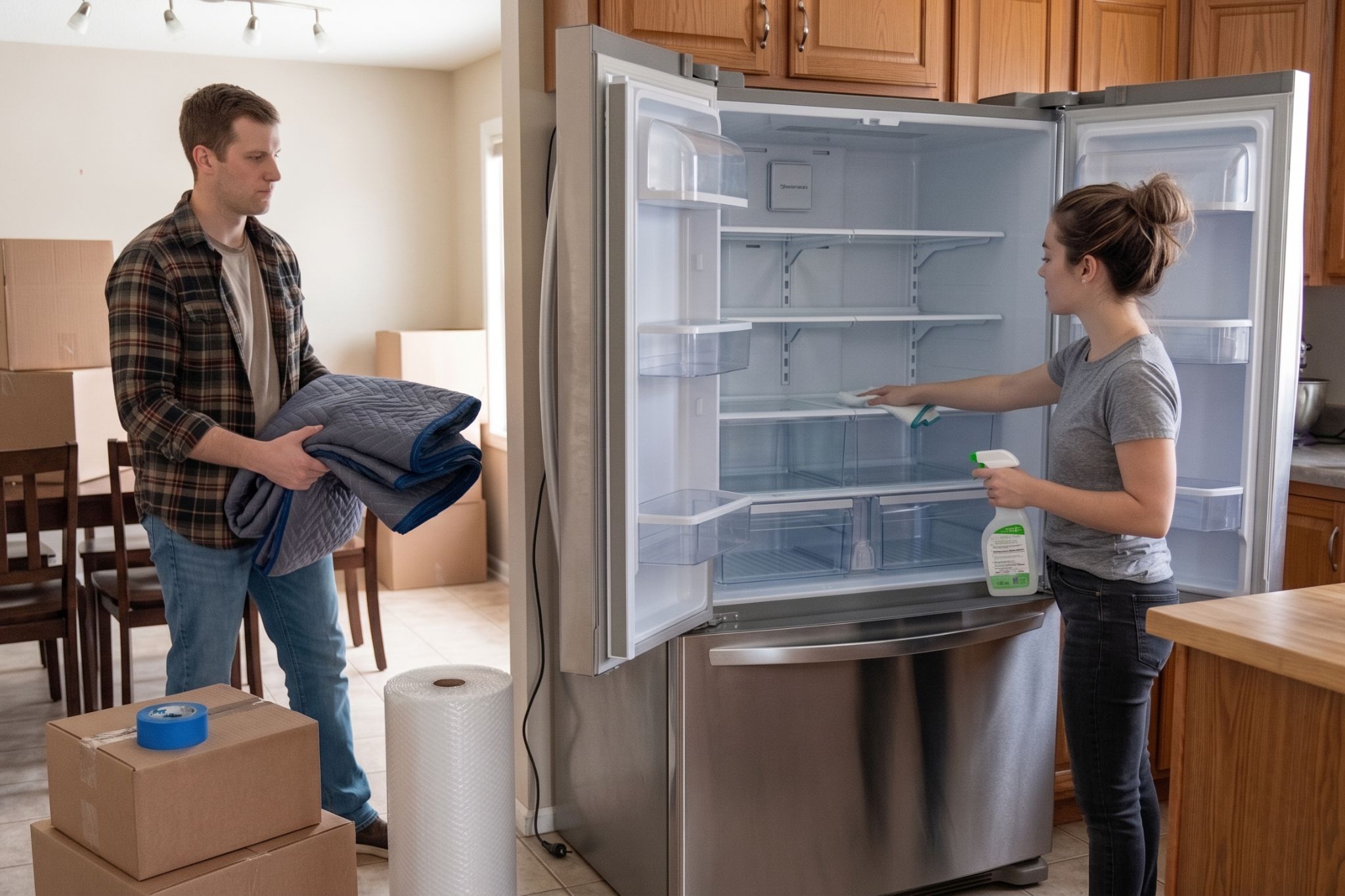
Empty the fridge at least 48 hours before load day. Unplug it 24 hours out so it can defrost fully. Drain and dry the drip pan, then leave the doors slightly propped open to prevent mildew. Coil the power cord and tape it to the back of the unit.
Refrigerators should ride upright when possible. If yours must be laid down, wait at least 24 hours after arrival before plugging it back in so the compressor oil can settle.
Washing Machines
Run one final empty cycle with hot water and a little bleach to clear the drum. Once it's drained, disconnect the water supply hoses, drain any water, and coil them inside the drum. Disconnect the drain hose and drain that one too. Secure the drum: front-loaders need shipping bolts reinstalled (check your manual), and top-loaders should have a rolled towel or piece of foam wedged in to keep the drum from bouncing during transit.
Dryers
Unplug and coil the cord. Clean the lint trap and vacuum out the lint duct while you're there. Tape the door shut with painter's tape so it doesn't swing open during transit. If it's a gas dryer, have a professional disconnect the gas line. Don't try that yourself.
Dishwashers
Disconnect the water supply line and drain any residual water. Cap or bag the water inlet to prevent drips. Wrap the racks in place with stretch wrap so they don't slide out. If your dishwasher is hardwired, get a professional to disconnect it.
Small Appliances
Toasters, coffee makers, blenders, air fryers, and the rest. Original boxes are best if you kept them. If not, wrap each one in packing paper or bubble wrap and pack them into a labeled box with plenty of padding. Empty and dry any water reservoirs (coffee makers and steamers are the usual culprits) so nothing leaks in transit.
Fragile and Specialty Items
A few other categories that need their own approach:
Electronics and TVs. Original packaging is ideal. If it's long gone, wrap the screen in a soft blanket first, then bubble wrap, then a specialty TV moving box. Bag cords and accessories separately and label them with the device they belong to.
Artwork and framed pieces. Wrap in glassine paper first (it won't stick to the surface), then bubble wrap, then cardboard. Never lay framed pieces flat during transit. Store them upright between sturdy items.
Lamps and lighting. Remove bulbs and shades. Wrap the base and shade separately. Coil the cord and tape it to the base.
By law, some items just can't go in a portable storage container. That includes anything hazardous, flammable, or perishable. Remove these from your boxes before load day:
- Flammables: gasoline, propane and propane tanks, kerosene, matches, fireworks, charcoal and charcoal lighter, aerosols, lamp oils, sterno, alcohol
- Chemicals: paints (latex and oil-based), paint thinner, cleaning solvents, ammonia, bleach, nail polish and remover, pool chemicals, motor oil, antifreeze, batteries (household and car), fire extinguishers, disinfectants, chemistry sets, darkroom chemicals
- Yard and garden: fertilizer, pesticides, weed killer, and other poisons
- Perishables: refrigerated food, frozen food, produce, plants, open or used food
Also carry with you, not in the container: irreplaceable documents, jewelry, family photos, prescriptions, and anything heat-sensitive like candles, records, or certain electronics.
For the complete list, see the Go Mini's Non-Allowables Checklist.
Container-Specific Prep Tips for a DIY Move
A few things separate loading a Go Mini's from loading a rental truck:
Use the tie-down points. Go Mini's containers have built-in tie-down rails along the interior walls. Wrapped and disassembled pieces are much easier to strap in securely, so keep straps and rope accessible near the top of the load.
Prep for road vibration. Long-distance transit means hours of small movements adding up. Anything with drawers or moving parts should be secured so it can't shift mid-drive.
If your container is going into storage before delivery, prep for duration too. That means moisture absorbers inside upholstered pieces and a second look at anything that might not survive weeks of Georgia humidity. Our guide to storing delicate items in a Go Mini's covers this in more depth.
Consider MiniGuard™ protection. Even with careful prep, some risks come with being on the road or in storage. MiniGuard™ is Go Mini's optional protection plan with a $0 deductible and up to $5,000 in coverage against fire, water damage, wind, vandalism, and theft. Ask the Augusta team about adding it when you book.
Once your items are prepped, the next step is loading strategy. Our step-by-step guide to packing your Go Mini's container walks through weight distribution, stacking order, and how to make the most of your space.
CSRA summer heat and humidity are hard on furniture and appliances. If your container will sit outside for more than a day or two:
- Double-bag mattresses and add moisture absorbers to upholstered pieces
- Confirm every appliance is fully drained (residual water in hot weather is a mildew factory)
- Load the container as close to your move date as possible, not weeks in advance.
Final Walkthrough Checklist
Before you close the container doors:
- Every piece cleaned, empty, and dry
- Disassembled items broken down, hardware bagged and taped to the piece
- Wrapping matched to material (blankets on wood, plastic on upholstery, bubble wrap and cardboard on glass)
- Mattresses in heavy-duty bags
- Appliances drained and defrosted, with doors taped shut
- Small appliances and electronics boxed with padding
- Non-allowables removed and disposed of properly (never in the container)
- Valuables, documents, and heat-sensitive items set aside to travel with you
- Load-day must-haves like medications, chargers, and a change of clothes packed separately
- Tie-down straps, blankets, and padding accessible for loading
Ready to Book Your Go Mini's Container?
Handle the prep stage right, and load day is the easy part. Take the time to clean, disassemble, wrap, and check the non-allowables list before load day, and your container will do the rest of the work for you.
Get an instant quote online or call the Augusta team at 706.203.4311. We'll bring the container to you and pick it up when you're ready.
Frequently Asked Questions
How far in advance should I start preparing furniture for a move?
Plan for 2 to 3 weeks of prep before load day. Furniture disassembly and cleaning can happen earlier in that window. Save appliance prep like defrosting fridges and draining washers for the 24 to 48 hours right before loading.
Do you have to disassemble beds for a moving container?
Not always, but you should for long-distance moves. Assembled bed frames eat container space and are harder to protect in transit. Broken down into pieces, they pack tighter and travel safer. Bag the hardware and tape it to one of the pieces.
Do you have to defrost a fridge before moving?
Yes. Empty the fridge 48 hours out, then unplug it 24 hours before load day so it can fully defrost. Drain the drip pan and dry the interior. A refrigerator that isn't defrosted will leak inside your container and can grow mildew during transit.
Can you move a washing machine without draining it?
No. Water left in the hoses or drum will leak during transit and can damage everything nearby. Run a final empty hot-water cycle, then disconnect and drain the supply and drain hoses. Front-loaders also need shipping bolts reinstalled to secure the drum.
Can you store a refrigerator in a Go Mini's?
Yes, once it's been fully defrosted, drained, and dried. Leave the doors slightly propped open during storage to prevent mildew growth. If the fridge was transported on its side, wait at least 24 hours after it's upright before plugging it back in.
Should I empty dresser drawers before moving?
Yes. Full drawers add weight, throw off balance, and put stress on glides and joints during transit. Once emptied, you can either remove the drawers or wrap the dresser in plastic stretch wrap to keep them closed during the move.
Can you store propane tanks or paint in a Go Mini's container?
No. Propane, paint (latex and oil-based), paint thinner, gasoline, and other flammable or hazardous materials aren't allowed in Go Mini's containers by law. The full list of prohibited items is in the Go Mini's Non-Allowables Checklist.